Cutest Things Font Review: A Playful Typeface for Small Business Branding
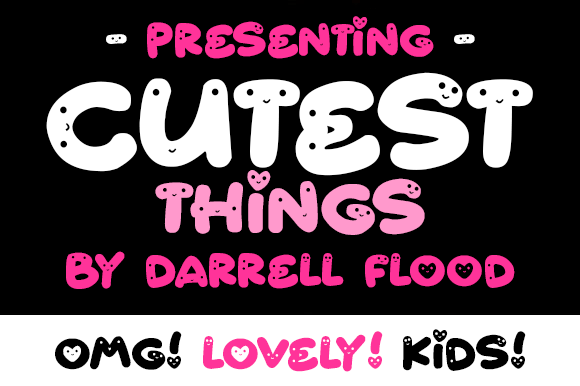
I was sitting at my kitchen table with a stack of plain cardboard bakery boxes in front of me, trying to figure out how to make them feel special without blowing my budget on custom printing. I run a small home-based baking business, and I had been using the same basic sans serif font for everything—labels, stickers, Instagram posts, even my shop banner. It was fine, but fine doesn't make people stop scrolling or smile when they open a box of cookies. That is when I stumbled across Cutest Things, a decorative font that immediately felt different. Each character in this typeface has a little face drawn right into it, which sounds like a gimmick until you see how it transforms a simple product label into something that feels personal, warm, and intentionally playful. I decided to test it on a handful of real business materials, and what I found surprised me.
Using Cutest Things for Kids’ Product Packaging and Labels
The first place I tried Cutest Things was on my mini cupcake labels. I bake for birthday parties and family celebrations, and I wanted the packaging to feel joyous without looking childish or amateur. Cutest Things, as a decorative font, brought exactly that balance. The little faces on the letters made the word “Celebrate” look like it was grinning back at me, and when I printed a test label and stuck it on a box, my daughter immediately asked if she could keep the box because she liked the “happy letters.” That reaction told me everything. For small business owners selling products aimed at children—think snack bars, party favors, kid-friendly candles, or custom coloring kits—this typeface gives you a way to communicate delight without needing illustrations or expensive graphic design. The font works beautifully on short phrases like “You Rock,” “Happy Day,” or “Little Treat,” and because each letterform carries its own personality, even a simple product label feels like a tiny piece of art. I recommend using Cutest Things at a slightly larger point size on labels so the facial details remain crisp, especially if you are printing on kraft paper or matte sticker sheets where fine details can get lost.
Cutest Things in Cartoon and Comic Branding Projects
One of my side projects is helping a friend design a simple comic book for her nephew’s school fundraiser, and we needed a font that felt energetic, readable, and full of character. Cutest Things was the obvious choice. The product description mentions that this font is perfect for cartoons and comics for kids and light family themes, and after testing it in speech bubbles and title panels, I can confirm that it lives up to that promise. The letters feel bouncy and expressive, and the embedded faces add a layer of storytelling that plain typefaces just cannot replicate. In a comic context, the font works well for chapter titles, character catchphrases, and cover text. I would caution against using it for long narrative text blocks because the decorative details can tire the eye over several paragraphs, but for headlines and callouts, it is genuinely effective. If you are a small business owner creating branded comics, activity books, or children’s digital content, Cutest Things gives your project a consistent visual voice that feels handmade and thoughtful. Pair it with a simple rounded sans serif for the body copy, and your brand will look both polished and playful.
Light Family Themes: How Cutest Things Warms Up Menus and Flyers
I also tested Cutest Things on a family-style menu for a weekend brunch pop-up I helped organize at a local community center. The event was casual, with pancakes, fruit bowls, and homemade lemonade, and I wanted the menu to feel inviting rather than corporate. Using Cutest Things for the section headers—like “Drinks,” “Sweet Treats,” and “Little Plates”—immediately softened the overall look. The little faces on the letters made people smile as they read, and several guests asked if they could take the menu home as a keepsake. That kind of reaction is gold for a small business because it means your branding is creating an emotional connection, not just conveying information. For light family themes such as daycare newsletters, church picnic flyers, school bake sale posters, or family reunion invitations, this decorative font helps you stand out while staying approachable. I found that Cutest Things works especially well on flyers printed in color, where the faces become a subtle design element that draws the eye without overwhelming the message. Keep the layout simple and give each heading plenty of breathing room so the character details can shine.
Pairing Cutest Things with Clean Sans Serif Fonts for Readability
After using Cutest Things for several projects, I realized that the font shines brightest when it is paired thoughtfully with a neutral companion. Because each letter in this decorative typeface carries so much visual personality, combining it with a clean sans serif font creates a balanced brand system that is both memorable and easy to read. For example, I used Cutest Things for the product name on a candle jar label, and then set the scent description and ingredients in a simple sans serif like Poppins or Montserrat. The contrast between the playful header and the clean body text made the label feel professional rather than chaotic. The same approach works for social media graphics: use Cutest Things for the main callout or quote, and a lightweight sans serif for the caption details or hashtags. This pairing strategy ensures your branding stays accessible on mobile screens, where decorative fonts can sometimes become difficult to read at small sizes. I suggest you test your combination on an actual phone screen before committing to a full run of printed materials. If the text is still legible and the personality still comes through, you have found a winning duo.
Commercial Licensing and File Formats for Cutest Things
Before you start using Cutest Things on your products, packaging, or client work, take a moment to review the commercial font licensing that comes with your download. Because this is a premium decorative font with unique character details, the terms of use will determine how you can apply it across your business. Some licenses cover personal use only, while others allow for commercial projects such as product labels, merchandise, social media templates, and even digital downloads. I always recommend checking whether the license includes multi-user access if you work with a team, and whether it permits embedding in digital products like ebooks or printables. The file formats typically include OTF and TTF, both of which work across major design software like Canva, Adobe Illustrator, Procreate, and Cricut Design Space. For print projects, the OTF version tends to handle ligatures and alternate characters more smoothly, so I use that for packaging and labels. If you are planning to use Cutest Things on physical products for resale, confirm that your license covers that specific use case. Taking a few minutes to understand the licensing now will save you from headaches later and let you focus on what matters most: building a brand that people genuinely connect with.
After a few weeks of using Cutest Things across labels, menus, flyers, comic panels, and social posts, I can say that this font has earned a permanent spot in my branding toolkit. It is not a font you use for everything, but it is a font you use for the things that need to feel special. For small business owners who want their brand to communicate warmth, creativity, and attention to detail, Cutest Things delivers exactly that. Whether you are wrapping a birthday cake, launching a kids’ product line, or designing a flyer for a community event, this decorative typeface helps your work stand out in a way that feels genuine, not gimmicky. And honestly, in a world full of generic branding, a font that makes people smile is worth every penny.